A songwriter friend of mine spent eleven years writing, recording, and shelving songs that never quite found an audience. Last spring, almost as an experiment, she typed a description of a mood into an AI music tool something about late-summer heartbreak and a specific kind of tired optimism and had a finished, fully produced track in under a minute. Vocals, instrumentation, mix, the whole thing.
Her reaction surprised her more than it surprised me. She wasn’t threatened. She was furious, in a strange, specific way. Not at the technology itself, but at how casually it had produced something that took her years of practice to approximate by hand. And then, a few weeks later, she was using the same tool to sketch out melodic ideas she’d never have arrived at on her own, treating it less like a competitor and more like an unusually fast, occasionally brilliant collaborator with terrible taste about half the time.
That tension genuine unease sitting right next to genuine usefulness is roughly where the entire conversation about AI music generation sits right now. This article is an attempt to walk through it honestly: what these tools actually do, how they work, where they’re genuinely good, and where the real questions haven’t been settled yet.
What AI Music Generation Actually Is
sound synthesis
The output isn’t pulled from a library. It’s synthesized from scratch, every single time, which is part of why two generations from the identical prompt can sound meaningfully different from each other.
The Sound Synthesis Behind the Music
Understanding the basic mechanism behind sound synthesis in these systems helps explain both their impressive capability and their occasional strangeness.
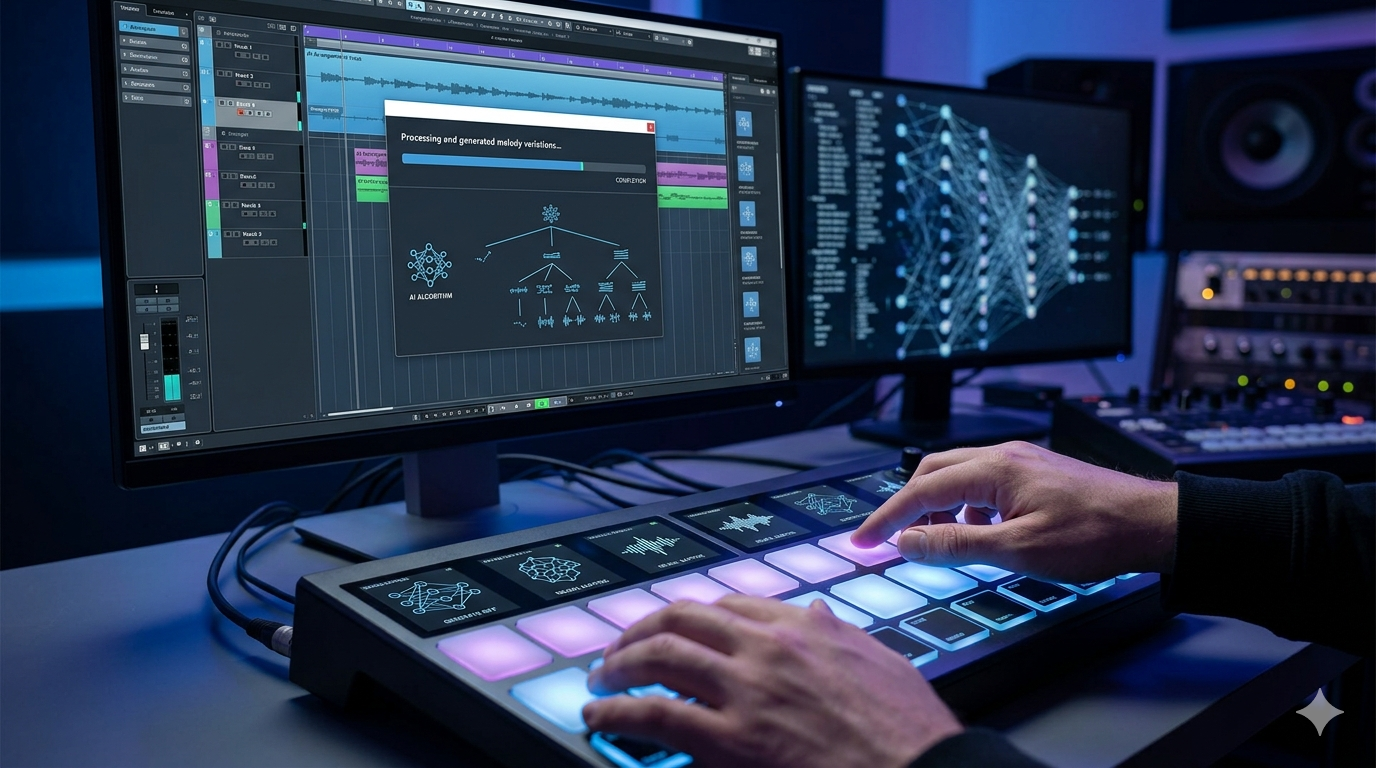
Modern AI music tools generally work by training a model to predict audio, frame by frame or in compressed representations of audio, the same general way a language model predicts the next word in a sentence. The model has learned, through exposure to vast amounts of training audio, what a snare drum hit tends to sound like in context, how a vocal melody tends to resolve, what a chord progression typically does next given what came before it.
This is fundamentally different from older computer-generated music, which relied on MIDI sequencing — essentially digital sheet music played through sampled or synthesized instrument sounds. AI-generated audio in tools like Suno and Udio is working directly with the sound itself, which is why the vocals can sound like an actual singer rather than a robotic approximation, and why the instrumentation can capture the subtle imperfections and textures that make recorded music sound human rather than mechanically perfect.
The Tools Actually Worth Using Right Now
Suno: The Accessible Generalist
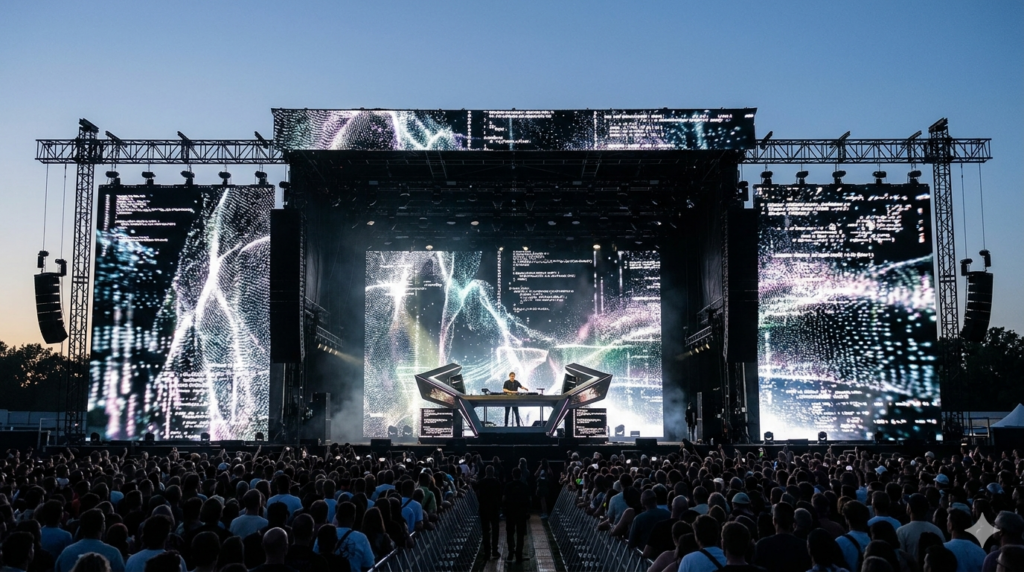
Suno has become the dominant name in AI music generation for a clear reason: you type a prompt, pick a style, and get a listenable track in under a minute, with a learning curve that’s nearly flat. That accessibility is a big part of why it’s become the default starting point for most people curious about this technology.
Sun’s scale is genuinely striking the company has reportedly reached roughly $300 million in annual recurring revenue with around 2 million paid subscribers as of early 2026, reflecting a market valuation north of $2 billion. That’s not a niche hobbyist tool anymore; it’s a platform with serious commercial traction.
Suno generates complete songs, including lyrics, vocals, and full instrumentation, directly from text prompts, and includes remix and extend features that let non-musicians meaningfully edit and build on what they’ve generated without needing traditional music production skills. The free tier offers ten songs per day with no credit card required, which is genuinely generous for understanding what the technology can do before committing financially.
Best for: songwriters and content creators who want fast, accessible results across a wide range of genres without a steep learning curve.
Udio: The Precision Tool
Udio was founded by a team of former Google DeepMind researchers, and that technical pedigree shows up clearly in the product’s personality. Where Suno optimizes for accessibility and speed, Udio leans into precision and editing control.
Udo’s standout feature is an inpainting tool that lets you select a specific section of a generated song and regenerate just that portion if the verse works but the chorus falls flat, you can fix the chorus without touching anything else. This kind of surgical editing addresses something producers have wanted since AI music generation began: the ability to iterate on a piece rather than starting over from scratch every time something doesn’t land.
Audio quality is a genuine strength, particularly in electronic genres, where Udio produces crisp, well-mixed output that holds up against professionally produced reference tracks. Pricing mirrors Suno closely, generally landing around $10 a month for a standard tier and $30 for a more advanced plan.
There’s also a meaningful licensing development worth knowing about: Audio settled with Universal Music Group in late 2025, with a jointly licensed UMG-Audio platform scheduled to launch in 2026, allowing UMG artists to opt into AI training and compensation arrangements. Audio has since reached similar agreements with Warner Music, Merlin, and Kobalt a notably more settled licensing position than much of the rest of the AI music space currently holds.
AIVA occupies a genuinely different niche from SunOS and Audio. Rather than generating full pop or vocal-driven songs, AIVA focuses specifically on classical and orchestral composition, trained on a substantial library of existing orchestral scores, and it delivers emotionally structured pieces with MIDI export capability that integrates directly into traditional music production software like Logic Pro.
For film composers, game audio designers, and anyone needing instrumental, orchestral-style underscoring rather than vocal-driven songs, AIVA’s specialization is a genuine advantage over more general-purpose tools.
Best for: composers working in film, game audio, or any context requiring orchestral or instrumental underscoring rather than full songs.
Quick Comparison: Choosing Your Tool
| Tool | Standout Strength | Free Tier | Best For |
|---|---|---|---|
| Suno | Speed, accessibility, broad genre range | Yes — 10 songs/day | Fast iteration, vocal-driven songs |
| Udio | Editing precision, electronic genre quality | Limited | Producers wanting granular control |
| AIVA | Orchestral and instrumental composition | Limited | Film, game, and instrumental scoring |
A Practical Workflow for Composing With AI
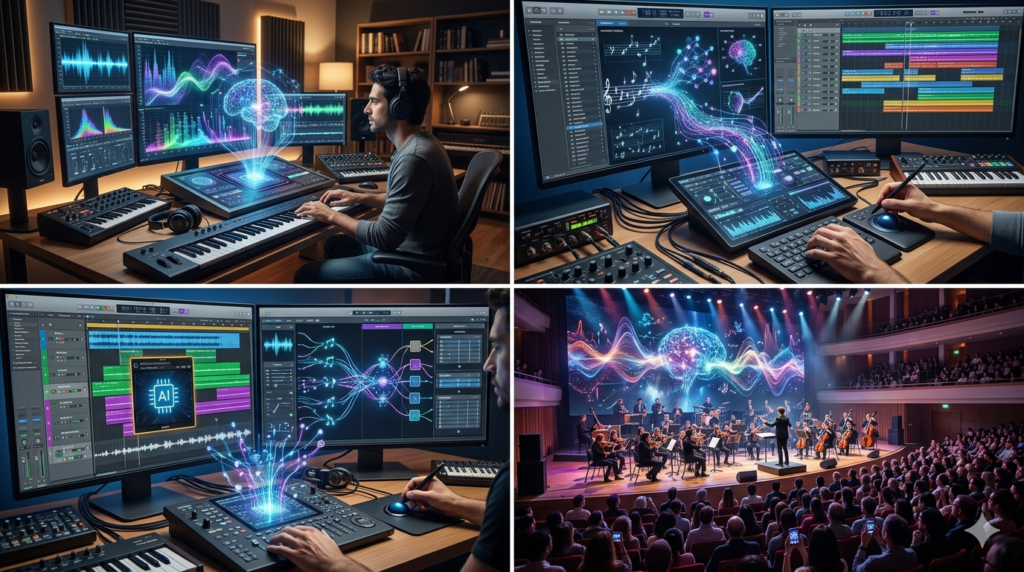
Having access to a strong tool is only half the equation. Here’s how to actually use these platforms in a way that produces something worth keeping.
Start With Specificity, Not Vibes
The most common beginner mistake is writing prompts that are evocative but vague “a sad song” or “something chill.” These produce technically competent but forgettable results, because the model has almost nothing concrete to anchor its generation to.
A genuinely useful prompt specifies genre, instrumentation, vocal style, tempo feel, and emotional arc. Something closer to: “Slow-building indie rock, female vocals with a slightly raspy texture, sparse acoustic guitar verses that build into full band instrumentation by the chorus, lyrics about returning to a childhood home that’s changed.” That level of specificity gives the model a real direction to work from, and the difference in output quality is substantial.
Treat the First Generation as a Sketch
Even experienced users of these tools rarely keep their first generated result as a final piece. Generate several variations, listen critically, and identify what’s working and what isn’t the melody might be strong while the production feels generic, or the vocal performance might be excellent while the lyrics feel flat. Most platforms make regeneration cheap and fast, and a few rounds of refinement consistently produce noticeably better results than a single attempt.
Use Editing Tools to Fix, Not Restart
This is where tools like Audio’s inpainting feature genuinely change the workflow. Rather than regenerating an entire song because one section isn’t working, isolate the problem and regenerate just that part. This mirrors how human songwriters actually work rewriting a weak bridge without scrapping a verse that’s already strong — and it produces more coherent final results than starting over repeatedly.
Bring Human Judgment to the Final Pass sound synthesis
The output from these tools is genuinely good, but “genuinely good” and “finished” aren’t the same thing. A workflow that consistently produces strong results involves generating with AI, then bringing the result into a traditional digital audio workstation for final mixing, sequencing adjustments, or blending AI-generated stems with live instrumentation or vocals you’ve recorded yourself.
This human pass is also where the work becomes genuinely yours rather than a a generic AI output the editorial choices about what to keep, what to cut, and what to layer in are where your actual creative judgment lives in this process.
The Honest Realities Nobody Should Skip
The Copyright and Licensing Landscape Is Genuinely Unsettled
This is the part of the AI music conversation that matters most and gets glossed over most often. Several major AI music platforms have faced legal challenges from record labels over the use of copyrighted material in training data, and the resolution of these questions is actively reshaping the industry in real time.
Udio’s settlement with Universal Music Group, along with subsequent agreements with Warner Music, Merlin, and Kobalt, represents a meaningful step toward a more legally settled landscape but it’s also worth noting the terms of these arrangements, where outputs from the jointly licensed platform reportedly cannot be downloaded or shared outside the walled platform itself. This is a genuinely different commercial arrangement than simply generating a song and owning it outright.
If you’re using AI-generated music sound synthesis commercially in a product, a video, a paid release — verify the specific platform’s current terms of service and licensing position directly before relying on the output, rather than assuming all platforms operate under the same rules. This is an area that’s actively changing, sometimes month to month.
Streaming Platforms Are Actively Responding
The scale of AI music generation has become significant enough that major streaming platforms have started responding directly. Spotify has removed millions of AI-generated tracks as part of efforts to address artificial streaming activity, and a large share of submissions to platforms like Deezer are now reportedly AI-generated. This isn’t a fringe phenomenon anymore it’s a meaningful share of the music economy, and platforms are actively developing policy in response, which means the rules of distribution may continue shifting.
The Music Still Needs a Human Point of View
Here’s the honest creative limitation, separate from the legal questions entirely: AI-generated sound synthesis music, left entirely to its own devices, tends toward competent but unremarkable output. It can produce a technically solid song in almost any style remarkably quickly. What it doesn’t reliably produce, on its own, is the kind of specific, idiosyncratic creative choice that makes a piece of music actually distinctive — the lyric that comes from genuine lived experience, the production choice that breaks convention deliberately, the imperfection that turns out to be the most memorable part of the recording.
The musicians getting the most genuinely interesting results from these tools are using them as an instrument or a collaborator, not as a replacement for their own creative voice. The prompt, the editing choices, the willingness to reject a technically good but uninteresting result that’s still where the actual artistry lives.
Where AI Music Generation Is Already Useful
Content creators and small businesses needing background music, intros, or soundtracks for video content now have access to royalty-considerations aside, genuinely usable original music without licensing existing tracks or hiring a composer for every project.
Songwriters experiencing creative blocks are using these tools to generate unexpected melodic or lyrical starting points, then reworking and personalizing the results into something genuinely their own treating the AI output as raw material rather than a finished product.
Film and game composers are using tools like AIVA to rapidly sketch orchestral themes and underscore concepts before committing to full traditional composition and recording, dramatically speeding up the early creative exploration phase of a project.
Independent artists without production budgets are using AI-generated sound synthesis instrumentation and production as a foundation, then layering in their own vocals, lyrics, and creative direction getting professional-sounding production quality that would otherwise require expensive studio time or production skills they haven’t yet developed.
Frequently Asked Questions
Q: Can I legally sell or release music I generate with AI tools? This depends entirely on the specific platform’s terms of service, which vary and are actively changing. Some platforms grant clear commercial rights on paid tiers; others, particularly those operating under newer licensing agreements with record labels, may restrict downloading or distribution outside their own platform. Always check the current terms directly before releasing AI-generated music commercially, since this is one of the fastest-moving aspects of the entire space.
Q: Does AI-generated music sound obviously fake? Less and less. The strongest current tools produce vocal performances and instrumentation that frequently pass as human-performed to casual listeners, particularly in genres like pop and electronic music. Subtle tells still exist for trained ears certain vocal phrasing patterns, occasional lyrical generalness, production choices that feel slightly too smooth — but the gap has narrowed dramatically compared to even two years ago.
Q: What’s the actual difference between Suno and Udio? Suno prioritizes speed and accessibility, producing full songs from simple prompts with minimal learning curve, and currently leads in overall scale and genre breadth. Udio prioritizes precision and editing control, with its inpainting feature allowing targeted regeneration of specific song sections, and tends to produce particularly strong results in electronic and instrumentally complex genres.
Q: Do I need any musical training to use these tools effectively? No, in the sense that you can generate a complete song with zero musical background. However, basic familiarity with musical terminology — genre names, instrumentation, structural terms like verse and chorus — meaningfully improves your ability to write effective prompts and evaluate what’s working or not working in the generated output.
Q: Is AI music generation going to put musicians out of work? The honest answer is nuanced. It’s already reshaping certain categories of work, particularly low-budget background music, jingles, and content where a generic but competent track is sufficient. For distinctive, artist-driven music with genuine creative perspective, human musicianship remains central, though increasingly assisted by AI tools rather than working entirely without them. The shift looks less like wholesale replacement and more like changing what kinds of musical work are commercially viable.
Q: How much does it cost to get started with AI music generation? Sino’s free tier offers ten songs daily with no payment required, making it genuinely possible to explore the technology at no cost. Paid tiers across major platforms generally start around $10 a month for expanded generation limits and commercial usage rights, scaling up to roughly $30 a month for professional-tier access with higher quality and more generation volume.
A Final Thought
There’s a particular kind of vertigo that comes from watching a machine produce, in under a minute, something that took human musicians centuries to develop the techniques for. It’s reasonable to feel unsettled by that. It’s also reasonable to find it genuinely exciting, sometimes in the very same moment.
What seems true, watching this technology develop in real time, is that the actual bottleneck in music was never purely technical execution. It was always the idea, the specific creative choice, the willingness to say something genuinely your own rather than something competently generic. AI music tools have made the technical execution dramatically more accessible. They haven’t made the creative judgment obsolete if anything, they’ve made it more valuable, because it’s now the thing that actually distinguishes one piece of music from another in a world where competent execution is suddenly cheap.
The musicians and creators getting the most out of this moment aren’t the ones treating AI as a replacement for their voice. They’re the ones treating it as an unusually capable, occasionally brilliant, frequently mediocre collaborator — one whose suggestions are worth listening to, and worth rejecting, in roughly equal measure.
Curious to try it? Sino’s free tier requires no credit card and gives you ten generations a day more than enough to understand what this technology can and can’t do before you decide whether it belongs in your own creative process.
Read more about Photo editing with Ai